Key points for AI and digital health
- AI framework: the MHRA aims to have a globally leading approach to regulating AI as a medical device by 2030. Planned elements are continuous monitoring of real-world performance, staged authorisation, expanded predetermined change control plans and exploring master files for foundation models. A new MHRA Centre for AI and Digital Health will build expertise and support developers.
- Safety and surveillance: a move to real-time monitoring using linked health data and AI analytics, working with the Health Data Research Service. From 2027, a more conversational Yellow Card interface, with integration into the NHS App and major secondary care record systems being explored. Unique device identifiers are planned for most devices, subject to parliamentary approval.
- Support for innovators: earlier and clearer regulatory advice, a new Innovation Accelerator, and continued sandboxes, including AI Airlock and regional AI sandboxes for pre-market products.
- Predictability: the stated aim is to be “a fast, expert and open regulator” by 2030, with reliable timelines and service standards.
- International alignment: more reliance on trusted regulators, exploring mutual recognition of devices with the US FDA, and considering indefinite GB recognition of EU MDR and IVDR devices following the 2026 consultation. The MHRA will chair the International Medical Device Regulators Forum in 2029.
- NHS adoption: the MHRA will work with the NHS and NICE on readiness, adoption and scale so approved products reach clinical pathways.
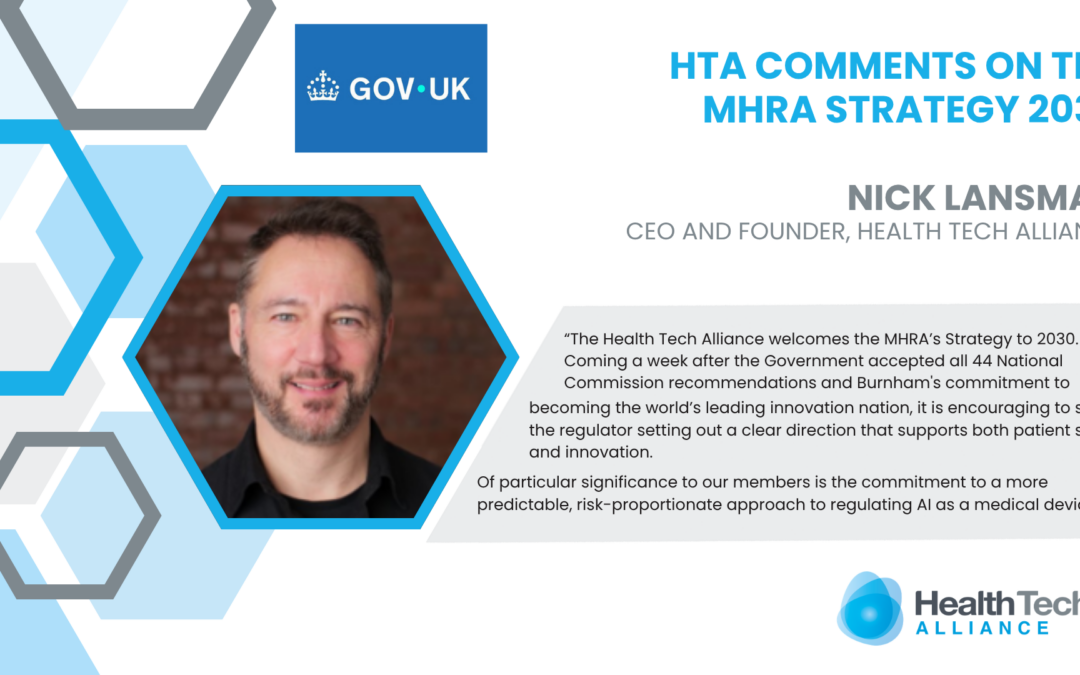
Nick Lansman, CEO and Founder of the Health Tech Alliance, comments:
“The Health Tech Alliance welcomes the MHRA’s Strategy to 2030. Coming a week after the Government accepted all 44 National Commission recommendations and Burnham’s commitment to becoming the world’s leading innovation nation, it is encouraging to see the regulator setting out a clear direction that supports both patient safety and innovation.
“Of particular significance to our members is the commitment to a more predictable, risk-proportionate approach to regulating AI as a medical device. Staged authorisation, expanded change control plans and real-world performance monitoring reflect how these technologies actually develop and improve over time. Alongside the new Centre for AI and Digital Health, the Innovation Accelerator and continued sandbox support, this gives innovators the clarity they need to invest with confidence.
“Approval is only half the journey, so we are pleased to see the MHRA committing to work with the NHS and NICE to help approved products reach clinical pathways. Delivery will be the critical test. The Health Tech Alliance looks forward to working with the MHRA as the detail develops, ensuring the voices of healthtech suppliers, including SMEs and innovators, are heard.”